
Urdu Best Poetry Biography
Source:-Google.com.pk
As it happened, the Deccan emerged as the earliest centre, even though
the language had first developed in northern India, as a result of an
interesting linguistic interaction between the natives and the Muslim
conquerors from Central Asia, who settled there in the twelfth and
thirteenth centuries, The period stretching roughly from the middle of
the fourteenth centuries to the middle of the eighteenth produce a
number of poets. They are claimed both by Urdu and Hindi literary
historians, but Quli Qutub Shah (1565-1611) is generally acknowledged as
the first notable poet, like Chaucer is English, with a volume of
significant poetry in a language later named Urdu. He was followed by
several others, among whom Wali Deccani (1635-1707) and Siraj
Aurangabadi ( 1715-1763) deserves special mention. Delhi emerged as
another significant centre with Mirza Mohammad Rafi Sauda (1713-80),
Khwaja Mir Dard (1721-85), Mir Taqi Mir (1722-1810), Mirza Asadullah
Khan Ghalib (1797-1869) and Nawab Mirza Khan Dagh (1831-1905). It
reached its height of excellence during the eighteenth and nineteenth
centuries. Lucknow made its way as the third important centre with
Ghulam Hamdani Mushafi (1725-1824), Inshallah Khan Insha (1757-1817),
Khwaja Haidar Ali Atish (1778-1846), Iman Baksh Nasikh (1787-1838), Mir
Babr Ali Anis (1802-74) and Mirza Salamat Ali Dabir (1803-1875). These
literary capitals, where the classical tradition developed, had their
individual stylistic and thematic identities, but broadly it may be said
that the ghazal (love lyric) reached its zenith with Mir and Ghalib,
qasida (panegyric) with Sauda, mathnawi (romance) with Mir Hasan and
marthiya (elegy) with Anis and Dabir.
Poetry is universal as every language spoken by mankind has in it some
poetic elements. Interestingly, though languages differ significantly in
the manner of expression, the nature of poetic expression remains
common indicating that poetry is more of a human phenomenon rather than
syntactical expression. From expression of love for a woman to revolt
against a regime, poetry carries in it an element of subtlety and
spontaneity—something created by the environs of the poet. To understand
a great poet, therefore, we must first look into his mind and his
awareness of the milieu exterior. Since Ghalib, undoubtedly the greatest
poet of Urdu language, expressed himself mainly through his writings of
love sonnets, it is imperative that we examine the art of love sonnets,
the language they are written in, and the environs that prompted these
writings to understand how Ghalib became a master of this genre.
In this chapter we will examine the roots of Urdu language, Urdu poetry
and particularly the genre of love sonnets, ghazals, in Urdu. The
following chapter will examine the life and works of Ghalib and the
third chapter will offer a broad view of Ghalib’s art of expression in
love sonnets, the ghazals.
Urdu, literally meaning “camp” in Turkish, is a mixture of many tongues
and languages. Muslims brought many different languages to India, and
diluted India’s languages freely with words from their own. When Delhi
was the seat of the Muslim Empire in the late 12th century, the
languages around Delhi, mainly Brij Bhasha and Sauraseni became heavily
mixed with Persian, the lingua franca of the Muslim rulers. Other
languages that found their way into the languages of India were Turkish,
Arabic and later English. Whereas much of the vocabulary of the
original languages (Sauraseni, for example) changed, the basic grammar
structure remained intact. In the 13th century, the language of India
became widely known as Hindvi, Hindi, and Brij Bhasha and was written in
the original devanagri script [the Sanskrit script]. The name gUrdug
was given to this thriving language of the region in the period of the
Mughal Emperor Shah Jehan (1627-1658). The language was introduced to
the southern province of India, Hyderabad Deccan, by the armies and
followers of the Tughlaq and Khilji kings in the 14th century. Affected
by the dialects of the South, the language became known as Deccani
(after Hyderabad Deccan), having adopted the Persian script and replaced
Persian in offices as the official language. Since the language was
written in the devanagri script for quite some time around Delhi, it had
been erroneously assumed that the first Urdu poet was Amir Khusro
(1253-1325) from the Deccan. The fact is many poets up in the North had
already been writing Urdu poetry, namely Kabir Das, Mira Bai, Guru
Nanak, Malik Mohammad Jaisi and Abdul Rahim Khan Khanan, who lived much
earlier than Amir Khusro.
Urdu Best Poetry Urdu Poetry SMS Sad Love Pic Wallpaper Ahmed Faraz Wasi Shah Romantic Photos Pics

Urdu Best Poetry Urdu Poetry SMS Sad Love Pic Wallpaper Ahmed Faraz Wasi Shah Romantic Photos Pics

Urdu Best Poetry Urdu Poetry SMS Sad Love Pic Wallpaper Ahmed Faraz Wasi Shah Romantic Photos Pics

Urdu Best Poetry Urdu Poetry SMS Sad Love Pic Wallpaper Ahmed Faraz Wasi Shah Romantic Photos Pics

Urdu Best Poetry Urdu Poetry SMS Sad Love Pic Wallpaper Ahmed Faraz Wasi Shah Romantic Photos Pics
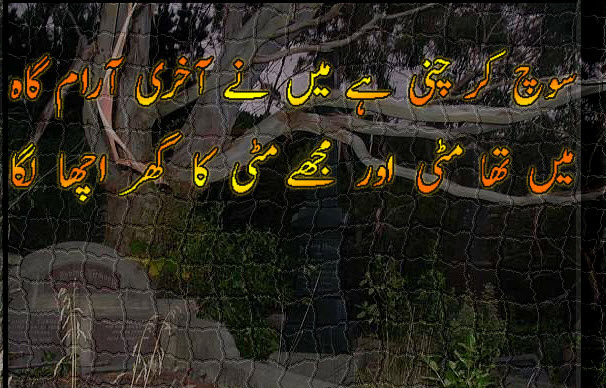
Urdu Best Poetry Urdu Poetry SMS Sad Love Pic Wallpaper Ahmed Faraz Wasi Shah Romantic Photos Pics

Urdu Best Poetry Urdu Poetry SMS Sad Love Pic Wallpaper Ahmed Faraz Wasi Shah Romantic Photos Pics

Urdu Best Poetry Urdu Poetry SMS Sad Love Pic Wallpaper Ahmed Faraz Wasi Shah Romantic Photos Pics
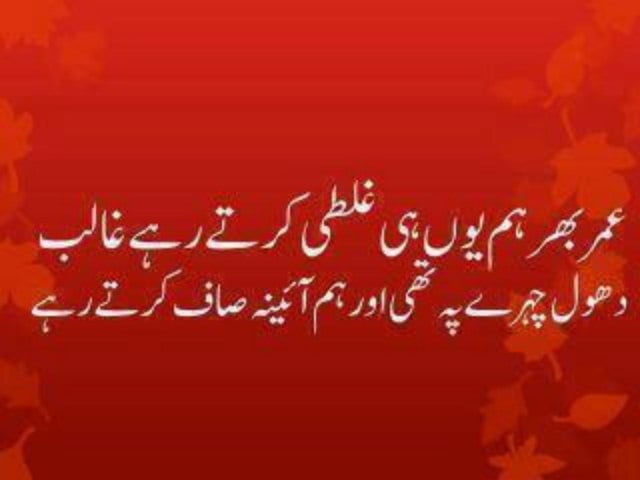
Urdu Best Poetry Urdu Poetry SMS Sad Love Pic Wallpaper Ahmed Faraz Wasi Shah Romantic Photos Pics

Urdu Best Poetry Urdu Poetry SMS Sad Love Pic Wallpaper Ahmed Faraz Wasi Shah Romantic Photos Pics


No comments:
Post a Comment